Wednesday, March 29, 2023

On Recruiting 1: Problematic Premise

I won't say I've never touched recruiting, but basically since I first transitioned from a sponge like student into a dollar earning worker my mind has honed in on the artless-science of recruiting as a likely key to almost everything.

Even earlier. In my final years of high-school my father a highly paid executive faced increasing job-insecurity. Not because the company was going bust or anything, but because he was being networked out of the company. Of course I only have his testimony, and from that I can deduce that he made some bad career moves and from him I suspect I inherited my non-victim mentality. It was more that his experiences, relayed to me by my mum introduced me to the possibility that organizations can nourish cancer and starve organs. Furthermore, what was scary for all of us, was that losing this job, my father could become unemployable - I believe the saying is something like "one moment a rooster the next a feather duster" in contrast consider the wisdom of the Blood Hound Gang lyrics: "old hands would rather put out than be put out to the pasture."

It was that fear that first struck me as a way the labour market and subsequently society might be broken - recruiters were like "should we look at this old guy? He might be good? nah fuck it just hire a fresh guy."

Anyway, the premise.

The premise I would have you accept is this, near truism:

If something is in the wrong hands, we need to examine the recruitment method.

So we can take this all the way up to "the world" being in the wrong hands, down to "hall monitor" possibly lower.

It applies to any responsibility delegated, beyond that this very often applies to relationships as in, whose hands we put our heart in. That's the "something", what about "wrong hands"?

Okay, if a) someone isn't doing their job/fulfilling their responsibility. Then wrong hands.

Also b) if someone isn't doing their job as well as someone willing and available could. Then wrong hands.

c) if someone uses their role parasitically (corruption). Then wrong hands.

Likely a sufficient but not exhaustive list going from mere opportunity cost to costly mistake. 

In a Total Quality Management (TQM) training session, we were asked to define what we thought TQM meant and I offered 'approaching perfection' which the trainer liked because 'perfection' or any ideal is something that likely cannot be achieved, but approached asymptotically. 

To borrow an analogy of Coleman Hughes, we may not even want to achieve the ideal - like we want to stop murders, and the measures taken by a society to go from 10,000 murders a year to 1,000 murders a year might be measures the society can live with, but to go from 1,000 murders to 0 murders requires measures nobody wants to live with.

Anyway, often the US election system is held aloft as an example of how not to do recruiting, but I want to hold it in a positive light. I'm going off my memory of events lived through though, so this example may prove (is likely to prove) entirely fictitious. The 2016 Democratic Party Primaries put the Democratic Presidential Candidacy into the wrong hands. Hillary Clinton was a terrible candidate. I'm not asserting that the primary was rigged or stolen (it could be, may have been) but rather what I'd emphasize is that in the absence of accessing the counterfactual, Bernie Sanders was likely a better candidate to put up against Trump. My very unscientific feeling was, at the time and now, that the democratic party missed the signals that the US public were tired of the status quo - a natural and predictable response to Obama campaigning on hope and change, basically maintaining the status quo.

Whatever else, I recall Hillary having a commanding lead very early in the primaries. Her pledged delegates vastly outnumbered the next best candidate even before Super Tuesday. It appeared a fait accompli. Drilling down, you could see that her lead consisted almost entirely of super-delegates. Like the super-delegates of California, one of the last and largest states to conduct their primary had already pledged to Clinton.

It's my experience of layman psychology, that people are suckers for fait accomplis. Confident people make up their minds fastest and if their initial responses are publicised you can move from wisdom of the crowd to stupidity of the crowd. I assert People frequently don't vote for who they want, but for who they expect to win, and in the US system if it appears someone has an insurmountable lead, why vote at all? The super-delegates created an artificial signal to lay primary voters that Clinton was way more popular than she was. Party insiders were basically saying we don't care what you think, we've already picked your candidate.

It's my very limited and un-fact-checked understanding that the Democrats kind of agreed, possibly Hillary herself, that she shouldn't have been put up as a candidate particularly against an existential threat to democracy like Trump. It was very myopic, hubristic, narcissistic. So there were some rule or norm changes...okay I fact checked this and it was actual reforms implemented to bind 2/3rds of any states super-delegates to the results of the primary.

Now, former Sanders campaign staffer Briahna Joy Gray I've heard claim the party establishment still found ways to quash the Sanders campaign in 2019, namely by having all the moderate candidates drop out to not split the Biden vote on super Tuesday. It's plausible, but so too is a narrative that Sanders' moment had passed, the US was tired of trying something different and yearning for a status quo, like a devotee of Coca Cola that regretted ordering Squirt. It's 2023, Biden's first term is halfway over and I still appreciate not having to hear about the US president taking a shit every day. Biden certainly delivered the mental tranquillity I craved after Trump, as someone who has never been a resident of the US.

But basically, the democrats revision of their recruiting process after it failed them in 2016 is what should be happening with any recruiting process, pretty much all the time.

Alas, I've worked too much, furthermore I've been a customer of way more organisations. Jobs are in the wrong hands all over the fucking place. To the extent that my partner shared a clip of a doctor talking to Rick Ruben about how one neurosurgeon he knows thinks Med-School textbooks are only 50% accurate and I thought "Hey that's pretty good." My anchoring bias has such guesstimates under 20%.

Today and tomorrow, there will be managers waking up, stressed by what to do with an incompetent employee. Offer them a package, terminate them and then settle on a payout, performance manage them out? Sure, that will treat a symptom of a failed recruiting process. A failure to screen.

The more pertinent question I assert is: How did we hire incompetence?

And then we cast a long sideways glance at our HR department. Frequently, the organizations least competent department.

Where I can wrap up part one with a teaser for parts 2, 3, 4...however many. We can look at processes where people post job ads with job descriptions that don't describe the job the person will actually be doing, and describe qualifications that aren't necessary, and use software to screen applicant resumes for keywords that neither predict nor apply. That do not fact check resumes or applications, especially if hiring someone referred by an existing employee, even a problem or incompetent existing employee. Calling referees who foist bad staff onto new employers via glowing recommendations with little to no consequence to themselves. Managers who skip the first rounds of interviews for candidates that will potentially work for them, delegating that process to HR. Relying on proxys for competence like academic transcripts, work experience or even educational institutions...using junk personality science like Myers-Briggs or its derivatives. Group interviews. Lunch interviews. Cronyism. Nepotism. 

I'm confident everything I've listed above exists. A large share of my confidence is that I've seen it., experienced it, first hand, second hand and third hand.

I feel I've also witnessed that a common response to a shithouse hire is focused on the specific, rather than the general. This shitty employee is the problem, we move too quickly to "what to do about x?" rather than, and I feel the question has to be phrased thus "how did we hire someone like x?"

Tuesday, February 21, 2023

The Debate *They* Don't Want You To See

Remember the 2000s? How should I know. I mean someone born in 2000 is 23 now. People born in 2005 can get into the clubs this year. Someone has to go to the clubs. 


For me, they were less about low rise jeans and emos and more about the war on terror and "new" atheist debates. Ostensibly book tours, I struggle to think of the "New Atheist" retail trend as a movement. 

Put simply, the Terrorist Attacks on the World Trade Centre Towers polarized the populations of people who take religion seriously, and those who don't. There was a sudden demand for articulate voices to facilitate explaining why people shouldn't take religion seriously and that demand was supplied largely by Dawkins, Hitchens, Harris and Dennett. 

At this point, let me highlight this: As an Australian I get the Flanders, neighbours of the Simpsons. To my Australian context, the Flanders are Christians. Which is to say, really weird people that say prayers before meals, prayers before bed, go to Church on Sundays, don't curse, have no hard edges etc. I grew up knowing strange people like the Flanders. What was incredibly weird was that an ostensibly normal family like the Simpsons, far more relatable, go to Church on Sunday and say prayers before meals. That's weird, for normal people to do that.

All of this is to say, the United States is a strange country, and a strange context, in that it seems uniquely socially acceptable to take religion seriously amongst the WEIRD nations (Western Educated Industrial Rich Democracies or whatever it is). 

And it has the subsequent most advanced and sophisticated apologetics for a mainstream religion in the world. Having said that...

"Spiritual but not Religious" is just "Superstitious" Misspelled

I want to cast the net wider than just the world's largest religion. This post is more about a mode of thought, patterns of behaviour. There are people who believe in Astrology, Ghosts, Psychics, Crystal Therapy, Machine Elves, The Lost Empire of Atlantis, Ancient Astronauts. 

If the 2001 attacks on the world trade center was a wakeup call for people who don't take religion seriously, that people out there actually do; the Covid pandemic was a wake up call for me that there are people who do not take "alternative facts" seriously.

The "they" in "The Debate they don't want you to see." are motivated rationalizers. 

That is someone who starts with something they want to believe, and work backwards from there.

I'm going to pick on the alternative history crowd, but it could also be the DEI crowd, in fact both these crowds have much in common when it comes to the debate they don't want you to see.

So alternate history is usually based on the theories (whether they know it or not) of Ignatius L. Donnelly which usually is something like humanity was really advanced, and then a meteor hit that wiped humanity back to the stone age and now there's a coverup of an ancient global advanced civilization, typically Atlantis or Alien Visitors.

People who are enthused by this idea and frustrated by it's lack of acceptance by people that are professionally obliged to build solid arguments and cannot arrive at any conclusion they want.

Alas the case for proposed alternative histories, specifically the case for the proposed alternative histories is weak. With any crowd there's a spectrum of presentability, reasonableness, articulateness etc. However, it is still the case that alternative histories generally need to be presented uncritically, for example Graham Hancock's Netflix series "Ancient Apocalypse" allows the presenter to constantly criticize "mainstream" archaeology (aka "archaeology") while at no point featuring any criticism of Hancock's theory.

Hancock has submitted himself to a debate, notably with Michael Shermer on Joe Rogan's podcast. Alas it was a debate we are permitted to see, though I've seen Shermer reflect on it and characterize their arguments as akin to "God of the Gaps" which I believe to be an application of "argument from ignorance" and though I can't recall that debate, I could concede that Shermer the skeptic "lost" the debate, alas, that debate was more "History is not definitively settled" which is certainly true and not "There was an ancient advanced global ice age culture" and that's a debate they don't want you to see.

Because having to provide a positive case, the alternative history crowd would constantly trip over fallacies. Here is a non-exhaustive list of the "greatest hits" fallacies committed by alternative history proponents in the opinion of Historian Dr. Miano part 1 and part 2.

Now, any discussion of fallacies, needs must I feel, include an acknowledgement of the fallacy-fallacy. Right, where someone can be correct and just argue fallaciously, meaning we can't reach the correct conclusion via the fallacious arguments. Like if someone argued that the "sun will rise tomorrow" why? "because my dad said so." Just because they argued an appeal to authority (and an inappropriate one) the conclusion isn't wrong.

If you had debates that refereed 1. facts and 2. fallacious arguments, it wouldn't be unfair, or suppressive, it would simply demand that debate participants present sound and valid arguments, instead of fallacious ones.

For example, if an alternative history enthusiast said "you can't explain how the Egyptians created the King's chamber, therefore aliens!" just would get sent back to the drawing board. And you could come back with, I guess, something like "look we can extrapolate a trajectory of archaeological discoveries that any new technology is likely to be older than the oldest example we have." or something, I really don't know what a non-fallacious argument for the popular alternative histories would sound like. 

All Arguments for God are Bush League

Youtuber Cosmic Skeptic is a smart guy, I would certainly not expect to win a debate against him and would regard such an endeavour as potentially a valuable learning experience for me and a complete waste of his time. That said, he's an Atheist youtuber that tickles some intuition in me that in 20 years time he may become one of those rare annoying Christian apologists that says "I used to be an Atheist". In part it's because he feels it is irrational to not want the Christian God to be true, which could be a rational position if there was some kind of consensus as to what the Christian God is (or even an intelligible definition).

I digress.

He released a video I must confess I did not get through, putting the "Arguments for God" into a gamer style tier list. These tier lists are usually created by gamers for the purposes of competitive play, for example ranking the roster of characters in a game like Street Fighter, Guilty Gear, Mortal Combat or Smash Bros. as to which characters are competitively viable and which aren't.

I didn't finish the video because I feel it didn't deliver what was promised on the package. 

All rational arguments for the existence of God are F-tier, you could then rank them within F-tier. 

I make this proclamation using a context where an S-tier argument for God would compel a reasonable person to accept the conclusion (there is a God) and furthermore what would make it S-tier rather than say A-tier is if it's simple to understand and explain, and forces a rational person to accept a conclusion that a specific God exists.

For example, the Cosmological Argument is F-tier. In it's simplest form it is posed as the question "Why is there something rather than nothing?" without answering the question "Can there be nothing?" nothing is an abstract concept never observed. Everywhere we look we find something. There's probably never actually been nothing in your fridge. 

In it's more accurate and articulate expression the cosmological argument states that everything that exists has a cause, the universe exists therefore it must have a cause. Apologists then tack on, therefore that cause must be God, and not just a God but the God that made use of a human womb even though he doesn't need sperm to incarnate himself as a dude that goes to Jerusalem gets arrested pretty much immediately and sentenced to death by crucifixion that turns out to be a sacrifice of himself to himself to forgive all of humanity in perpetuity of the sins of breaking the rules that he made up and also knew everyone would break until this gesture.

They digress.

So this argument can be relegated to F-tier because: as explained by Bertrand Russell via the law of parsimony, if you need to posit an unexplained entity like God to explain an entity like the universe, and retreat to a position that God needs no explanation (everything has a cause except God) then you can just cut out God and say the Universe requires no explanation. That's kind of combatting laziness with laziness, and Bertrand Russell also slaps down the cosmological argument by pointing out it's fallacy of composition

The fallacy of composition is where you conclude that say because H2O molecules are not wet, water therefore isn't wet. Or because all men and women have a mother, humanity has a mother. So if all things we have observed in the Universe have a cause, it actually doesn't follow that we can conclude the Universe has a cause. I mean it almost certainly does, but it could be its own cause, it could have emerged from an unthinking unstable geometric shape. William Lane Craig might argue that these other possibilities can rationally be excluded. William Lane Craig might be the best apologist there was. William Lane Craig though, is bush league.

The Debate They Don't Want You To See

So all arguments for God are bush league, F-tier, 0 + 0 + 0 + 0 + 0 + 0 + 0 does not equal one. A reasonable person can reject all the arguments for God without resorting to thought suppression, cognitive distortions or other psychological defences. I'm not saying Atheists don't commit fallacies or reveal cognitive distortion or thought suppression, merely that it's not necessary.

Many debates that are televised public events are kind of impossible to lose. They aren't a court of law where the state rules on a verdict or declares a mistrial. Perhaps the closest to a competitive event as opposed to a promotional event are the debates hosted by Munk where the live audience is polled as to where they stand before the debate and polled again as to where they stand after the debate. 

This still has flaws though, for one the audience must self report and it wouldn't take much savvy for a bad actor to want some side of the debate to win so report themselves "for" a resolution with every intention to switch to "against" or vice-versa. More commonly I suspect that many audience members at first polling have misinterpreted the resolution, or set it up as a dichotomy (where it isn't merely incumbent to say the resolution is true or false, but that the opposite of the resolution is true or false) etc. and the debate doesn't so much persuade as merely educate the audience as to what the debate was about. 

Or someone like Malcolm Gladwell could just tank one's side chances of winning. Which is a handy segue to the debate that many don't want you to see.

So imagine two people, or six sitting in chairs on a stage or faces on a video chat waiting for their turn to speak for or against a proposition. The first speaker gets up and says "Two thirds of the world's population pray to a personal god every day..." and a klaxon goes off, a note pops up on the screen alerting the audience that the argument is fallacious - "argumentum ad populum" the number of people who hold a belief have no bearing on the truth of that belief. - kind of like when counsel yells 'objection' and the judge either sustains or allows the objection. 

The speaker a little rattled tries another approach leaning on Aquinas' five ways "an event may or may not happen so everything needs to be created by something that must exist..." another klaxon, another pop-up "special pleading" and "fallacy of composition" the speaker scratches their head familiar with Kant and Hume's rejections of Aquinas' first three ways moves onto the fourth "no good thing is supremely good, so..." another buzzer "presupposition" or maybe "begging the question" or just plain "wrong premise". The speaker says "what about final cause?" "begging the question."

And so on and so forth through ontological, argument from beauty, argument from consciousness, teoliological argument, rational warrant (doesn't require anything supernatural to exist), Witness testimony, historical events, historical personages, anecdotal evidence...

At some point, the team speaks up "if you want a debate in which we don't use fallacious or presumptive arguments, then we have nothing to debate!" 

This post isn't just to say that all extant Apologists are charlatans that should be out of a job. I gravitate towards the Theist-Atheist/Deist debates just because IT'S A VERY LARGE DATA SET. Just a small portion of which are the archives of "Atheist Experience" call in show, where weekly for two decades theists have called in and never presented a compelling argument for the existance of a god let alone THE God.

The ancient astronaut crowd, or the ancient lost mother civilization by comparison is a very small dataset. There is also the very recent phenomena of Postmodern/Critical Social Sciences positions that simply assert and don't even argue (as at writing you still can't find any recording of Robin DiAngelo or Ibram X Kendi engaging with a critic of theirs). 

I guess there's two things, maybe three, that characterize the debate *they* don't want you to see. 1. A world of facts/a constitution of knowledge and 2. fallacies are demonstrable, hard won achievements of human thought.

I posit that there is some population of public intellectuals, academics etc. that would be willing to participate in a debate right up until presented with terms of the debate including a) fact checking and b) a fallacy buzzer at which they would withdraw their participation

I've recently been binging videos from the Youtube Channel "World of Antiquity" a channel that dedicates many hours to fact checking and debunking claims of the Ancient-Astronaut or Ancient-Atlantis type crowds. It's admirable work, a noble attempt to combat the motivated reasoning, confirmation bias and outright dishonesty of that crowd. 

It brings to my attention the tactic of "Gish Gallop"; a tactic that exploits ye olde saying "A lie can travel halfway across the world before the truth even has its shoes on." Simply, you can use 3 minutes in a debate to make 100 claims that each would take 3 minutes to debunk. A debate with fact checking ie. a refereed debate wouldn't leave the debunking of gish gallop claims incumbent upon the debater. 

For a year, maybe two, I was an adjudicator for DAV, I would be told to go to various high school campuses on different dates and get paid $50 to judge student debates. That style of debating, I cannot recall if there was ever an instruction to adjudicators that was like "if a team makes a fallacious argument or factually incorrect claim, the other team doesn't have to respond to that point." To be honest the judging of debates was highly subjective and almost arbitrary. I believe standard practice was to score all speakers 75 out of 100 and then add or subtract a point or two based on whether you felt they did a good job. Adjudicators were not even trained to recognize fallacies.

I propose it would be humiliating for Dinesh D'Souza or the like to have to sit and have a moderator painstakingly fact check his speech consigning most of his talking points to the trash heap before his opponent has to respond. 

The Tech is Nigh

I recall Trump getting frustrated early in his presidency that CNN often used its news ticker to fact check claims as he made them. It is within the realm of possibility that AI or algorithms could fact check claims made in youtube videos as they are uploaded. No suppression of speech or take downs, just a thing where if you want to claim that nothing but diamond can cut granite in a video, any viewers will be informed that this is not the case. 

If Jordan Peterson wants to fudge the conclusions of research into psychedelics as "the only cure for alcoholism is a religious experience" his fanbase could get notified that this is misleading - the term is "mystical" experience there's no suggestion of an equivalence between being moved by singing in church and ingesting psychoactive drugs.

I feel persuaded by Timothy Snyder's notion that we are living through a period analogous to the introduction of the printing press. There were teething problems then, people published anonymous hogwash pamphlets that confused the general public and lead to things like literal witch hunts and pogroms. Eventually they introduced solutions like "authorship" and "table of contents" "publishers mark" etc. that gave information a degree of quality assurance. 

Prior to the global pandemic, facebook, twitter and especially youtube had no real quality controls on information. Because of the infodemic, some measures were introduced. Those measures will continue to evolve.

Some platforms might drag their feet. But just as Google knocked Yahoo off what seemed an inassailable position by delivering better search results, someone could knock Youtube off its pedastal if via nothing but word of mouth people come to appreciate a channel that controls for horseshit. A "this channel prevents me from winding up in weird cults" appeal.

Is Debunking Suppression?

David Miano host of "World of Antiquity" beautifully articulated a common dubious claim/characterization of Ancient Atlantianologist/Psuedohistorian Graham Hancock and ilk that their narrative is being "suppressed" by mainstream archaeology or "the establishment" but I'll have to paraphrase because I can't recall which video he said it in - "These claims haven't been suppressed, they've been examined, evaluated, debunked and consigned to the garbage. But there will always be people willing to pull it out of the garbage, polish it up and try and sell it again."

This is the most interesting point of the debate, that juicy idea of "epistemic exclusion", or as I intuit it, and I'll be upfront about that, that it is not just suppression but oppression to tell someone they "cant" believe what they want. 

So, say you are one of the people that believe all the Jews called in sick and subsequently did not die in the terrorist attacks of September 11th, 2001, a claim that is easily fact checked by simply going to the list of victims and (to lean on stereotypes) simply hitting ctrl f and searching the list for "stein".

Or say, you are one of the people that believe that the Egyptian sarcophagi are made impossibly precise, a claim that again is easily fact checked by the measurements (or even observations of the naked eye) show that they aren't precise. (Or claims that nobody knows how something was moved or made, when we have the tools, the quarry, and sometimes even documentation by the culture as to how they did it).

Or you claim that people know when they have gender dysphoria and know when to transition socially and medically, a claim easily refuted by producing the testimony of a single de-transitioner.

This behaviour extends across the political spectrum and beyond. It is something astrology girls have in common with QAnon, that DEI consultants have in common with Young Earth Creationists. That Anti-vaxxers have in common with Out-of-India proponents.

It is simply motivated reasoning, rationalization and when one comes up to a conflict between holding the belief and rationality, that conflict is simply avoided to maintain the belief. Like juggling a man made bubble through a field of very real and spontaneous thorns.

But as to the question of whether debunking is suppression, we can see an intellectual effort that takes it a step further. Where people want to preserve flimsy bubbles of their own creation, they cry "no-fair" that thorns exist.

Which is to say, maybe you take a Deepak Chopra approach and with no relevant expertise attempt to quote quantum physics research findings to conclude that anything is possible if we just believe it, or you take an "applied post modernist" approach and lean heavily on words being infinitely deconstructable proxies for the things words attempt to describe and insist that basing knowledge on predictive power is but one paradigm of oppression.

Geology, archeology, genetics and linguistics for example are domains of real expertise that often stand at odds with wishful thinking. They say things like 'sorry it's just not that old' or 'sorry it's just not that young' or 'sorry the family tree is substantially bigger than that' or 'sorry but it comes from over there not here.' etc.

Youtuber Ryan Chapman makes the point that physical things are usually not controversial. We do not have men and women engaging in bitter disputes on BBC news programs over whether water is wet, fire is hot and whether things fall up or down.

It's probably a less incindiary version of pointing out that when people organize a psychic convention they do not simply levitate to the appropriate place at the appropriate time, but instead tend to use email, phone, planes, trains and automobiles to gather and discuss the untapped potential of the human mind.

Rejecting the concept of knowledge itself is I'll concede an interesting and confounding move. It isn't ever a persuasive one. If you want to talk entitlement and privilege, nothing gets more self-entitled and privilege preserving than special pleading

And you might, just maybe, resist that charge by saying "I'm not pleading for a special exception to empiricism and rationalism, I view those and other 'sound' epistemologies as a universal tool of oppression." and then... your house gets robbed. It gets robbed by bumbling idiots that have criminal records, leave fingerprints all over everything, drink from glasses they left behind, take ipads and laptops and smart phones with them and forget to disable the 'find my phone' applications, one of them even drops his wallet with drivers license in it.

You tell the police that when you searched for the location of your devices they all turn up at the same address as the ID in the wallet, and they say 'whoah, that's weird, the name on that ID matches the name in our database when we ran the prints and DNA.' you breath a sigh of relief 'phew, so this'll be one of the rare cases where we get our stuff back...' and the police officer stops you 'not so fast. Who's to say what appears to have happened, did in fact happen? Unfortunately, we can't rule out the possibility that this is the work of mischievous fairies, nor a dark city scenario where alien beings in search of a soul are altering our memories of who we are every night and none of this has any consequence. We also can't rule out that property is whiteness and that in fact the theft of your property is actually an act of reparation and the real injustice would be to recover your goods and return them to you...'

I don't want to rehash previous posts about 'alternative ways of knowing' and the dishonesty with which these are described as 'alternative' again. I merely wish to make the point that if you want a bounded exception for non-evidence based beliefs you are special pleading. If you actually think the wholesale relaxation of epistemic standards is a good thing, you are probably fixated on your niche interest in arriving at a particular conclusion and haven't thought through what would happen if everyone could do this.

So let's leave this here and get back to the debate.

A Particularly Egregious Thing

Imagine you see a poster on a notice board with the vaguely sensational title "Free workshop: Double your income!"  intrigued by its incompetence you resolve to go. Hosted by a local church, there's 8 or 12 people there. The presenter presents his case:

"We all know the saying 'tails never fails' right? If you are going to bet on a coin toss, you bet tails. Why? Because it's the simplest way to double your money. That's why when you get your paycheque, you'll never find someone willing to bet their paycheque against yours over a coin toss. Right? If they did we'd all be doubling our money right? Well! What if I were to tell you that there are institutions that will take that bet? Okay, get ready for it, I'm going to reveal the best kept secret of the mega rich - they are called casinos. They hide their coin flip on a game called roulette, and 'tails' is 'black' the secret of the rich is 'always bet on black'..."

So while mercifully succinct, I will extend to you the credit that your brain is breaking under the strain of how egregiously wrong this presentation is down to the roots of every single premise.

You interrupt, you point out, that tails often fails, that such a fact is something you can demonstrate here and now for the entire group because you have a coin in your pocket. Furthermore, you point out roulette is not analogous to a coin flip because of '00' so putting everything on black every time you get paid is actually worse than betting it on a coin flip, because you can statistically expect to lose. 

Okay, okay. It's fine if other attendees start coming out with 'hey man shut up!' that's on them. What is heartwarming is that the presenter holds out open palms and says 'No, no, no. I'm sorry, I think they are actually correct. My strategy is actually on second thought a high-risk low return strategy. Sorry to have taken your time.' People mumble disgruntled sentiments under their breath as they shuffle out.

You chat with the presenter for a bit, ask him how he makes money from this free presentation, is he an employee of the casino in town or something. He says it's from his self-published book sales, but tonight is going to be a bust and he'll probably have to go back to the drawing board.

Months pass.

While going for coffee, you notice a familiar poster taped to a light pole. It's the same presentation. Unable to help yourself, you resolve to go again.

And this is where my dick would get twisted. You go along, and the presenter presents the same presentation that you corrected him on. Exactly the same. He hasn't even shored up the problems with the old presentation, he has simply moved on to a new audience.

This is largely how debates work, or at least what they permit by their structure. The audience is left to adjudicate and the audience is simply not competent. Firstly, right, did you know there are more neurons in your gut than your brain? You don't, because it isn't a fact, I just made it up and we can't trust audiences to be in possession of the facts in order to fact check debaters, furthermore we can't even trust the audience to identify claims that require some argument or justification.

Even in the situation of gish-galop where someone like Dinesh D'Souza is just throwing out claims left, right and center, have fact checkers that function much like line judges in tennis. Ten to a table that just take a claim left to right and just give it a google, or search snopes. British panel show Qi has research 'elves' that look shit up during recordings, often within one or two minutes and that is achieved with BBC money. Youtube autogenerated transcripts are getting pretty good and certainly useful, and AI powered chatbots I understand are getting pretty useful too. It is not far away that fact checking a live debate could become automated.

Secondly, as prolific and annoying as keyboard warriors are that just call out fallacies but most often forget the fallacy fallacy, audiences can't be trusted again to identify fallacies particularly trickier ones like the prosecutors fallacy (confusing the probability of A given B with the probability of B given A) most people aren't up to the task of identifying basic ones like ad hominems and appeals to personal incredulity.

Refs don't call foul, or hand out yellow and red cards in debates. I'm sure the large part is because audiences don't turn up to see a forfeit. The other thing is, is that it's hard to set up a Mayweather vs Alvarez, a Tyson vs Hollyfield, an Ali vs Foreman in debates where two people with comparable records and comparable physics can match off against eachother and create some degree of uncertainty.

Most often, debates simply don't have outcomes. They are something you watch and turn off and everyone leaves convinced that their side owned the other. 

Debates Done Wrong

In my lifetime, the indigenous sport of my home country Australian Rules Football, or AFL has undergone numerous changes. I like to imagine that before my time, it was even cartoonish with 70s players eating meat pies and sausage rolls during half time, and downing a pint of beer before walking back out and immediately getting in a fist fight.

In a hostel in New York I sat with some locals watching an NBA game that featured the San Antonio Spurs, then with franchise player Tim "The Big Fundamental" Duncan. Duncan is undeniably an NBA champion, perhaps one of the all time greats. I contend, if your nickname is "The Big Fundamental" the game has a problem. Tim Duncan was one of the least exciting, most boring, most sensible players to ever play the game. My favorite articles from the Onion almost all involve Tim Duncan and how boring he is, on and off the court.

And how boring Tim Duncan is/was came up in conversation with the locals, and I made the point that in AFL rules change for two reasons - safety and excitement. Often in a pre-season the league tries out new rules like shot clocks and super goals (goals worth 9 points). Some of these rules get adopted.

Many are designed and tested to eliminate stuff that gums up the game and makes it boring to watch. Others are to increase the games' safety. A memorable one being the change from an unpredictable bounce to kick off a ruck contest to the umpire throwing the ball up. Owing to the odd shape of an AFL football, it is very hard to bounce straight up in the air, veteran umpires could still absolutely screw up a bounce and where two increadibly large men are unable to predict where they will collide, those collisions got much more dangerous.

Play doesn't just conform to rules though, but also to the meta. Like AFL used to have much more all out brawls in the 80s and 90s than it does now, players used to get into punch ons. It was never within the rules that you can punch other players in the face, chest and kidneys, so how did it stop? The umpires used to stop the game and wait for the fights to resolve, where now they continue play so you can fight simultaneously to letting your side down and jeopardizing the game. The umpires started making fighting the coaches problem who in turn made it the players problem by dragging them off the field to the bench.

So here's a primo example of the debate they don't want you to see. Actually, admittedly I'm going a bit more meta than that, here's a review of a primo example of a debate they don't want you to see: "Is Christianity Rational?" I will disclose I didn't watch the initial debate, because I've seen enough of Matt's debates to trust his reviews of the debates, particularly debates hosted by that Youtube channel. 

It sounds like an example of a debate we still haven't seen because the affirmative (Christianity is rational) didn't argue that Christianity is rational. 

To compare this youtube channel that hosts debates to the AFL. The AFL can say 'we are tired of rucks getting career ending injuries - we'll change the rules, no more bounces, the ball will be thrown up into the air, and rucks can't grab the ball, they have to tap it out, basketball style to minimise the hard tackles rucks are subjected to." aka this sucks, lets get rid of it. Anyone hosting a debate could resolve "gish gallop sucks. It doesn't make for good debates, let's get rid of it." and now I'm just going to make up some anti-gish-gallop rules that could be tried - so an obvious but bad solution would be to mute a speaker if they make more than three arguments, or make three claims without arguments. 

Another potential solution, is to not just constrain a speakers opening statement by time, but by the number of arguments they could make. It is quite reasonable to instruct and restrict participants to start with your best argument. Where part of the format is 'opening statements' it seems reasonable to obstruct speakers from making any arguments and simply define the terms eg. what do you mean by rational? What do you mean by Christianity? Do you want to defend biblical literalism and inerrancy, or a more flexible and abstract interpretation of scripture?

Another potential solution would be for ajudicators to inflict time penalties for gish gallop eg. due to the overwhelming number of arguments you made, we'll allocate your next 5 minutes as additional time for your opponent to respond. Or combine this with calling Hitchen's Razor where any and all unjustified claims or unsubstantiated claimes are declared by the adjudicators to not require a response from the opposition...

Here I feel it is worth comparing the entertainment form known as debates to an institution like a court of law.

The first thing debates get wrong, is they pit two individuals or teams against each other. The above debate topic "Is Christianity Rational?" is a yes/no question. It should be distinguished from a seemingly equal but in fact opposite topic of debate "Is Christianity Irrational?" which has an equal and opposite burden of proof. (but not an equal and opposite paucity of proof) Debates can be construed as both teams having an equal task (though they don't) - eg. that one side has to make the case that Christianity is rational, and the other team has to make the case that Christianity is irrational.

However, that gives us 4 potential outcomes - 1. Someone makes the case for Christianity's rationality, 2. Someone fails to make the case for Christianity's rationality, 3. Someone makes the case for Christianity's irrationality and 4. Someone fails to make the case for Christianity's irrationality.

And the thing is, if both participants of the debate have an equal burden of proof, we can produce four combo-outcomes. Both make their case, both fail to make their case, one makes their case or the other makes their case. The munk debates with their pre-and-post polling of audience disposition while giving one of the more meaningful results to debates available I feel still produce results based on this 4 outcome model.

Burden of proof is often counter-intuitive, which is why much of the pseudo-scenes (real scenes oriented around a pseudo science) so frequently leave members unchastised for trying to shift the burden of proof, "yeah if you don't think the Egyptians learned to build pyramids from aliens you move a 800 tonne slab of granite." etc.

Now there is a degree to which debates and legal trials converge - usually in organizing a debate, there is an email exchange where the participants agree as to the wording of the debate topic. This is by my reckoning, the closest approximation of a preliminary hearing by a judge. I, as a lay person may not have my legal jargon right, but I understand that before a trial judges generally have an opportunity to decide whether there is a case at all. If not, the judge throws the case out.

Debates are entertainment, they are not inconsequential but they do generally achieve little-to-nothing. I guesstimate it to be in that range. Someone like Matt Dillahunty who might do more than 12 debates a year, I feel achieves much in the aggregate, but little in any one debate. The same could be said of his tenure on the Atheist Experience.  

That said, I feel strongly a topic like "Is Christianity Rational?" is a good topic to debate. It is simply likely to be structured incorrectly - the preliminary hearing should be the first step of the debate. So the burden of proof lies in the affirmative, and it's a pretty low burden - produce a rational argument for...specifically Christianity. 

Probably, there's no way to prevent a participant from defining "rational" as something "irrational" by the sound of Matt's review, it sounds like his opponents main line of argument was an ad populum, or ad hominem line. Other tactics might be an attempt to conflate "irrational" with "insane" so you can go "look Christians clearly aren't insane therefore they must be rational."

Most importantly though, if that's where the debate is: "what is a definition of rational we can all agree to?" that is where the debate should get arrested. Generally speaking, when it isn't a high-school sport, but more public entertainment, adjudicators do almost nothing. At most in my experience they attempt to keep speakers to time. 

Currently permitted, is for a participant in a debate to turn up and not even debate the topic of the debate. For example, see Dillahunty's subsequent review of and prerequisite debate on Pascal's Wager with Sal Cordova. That's how hands off adjudicators are they would literally allow a speaker to rant about their cheating ex-wife in a debate about "Which Crusade was the worst?" so long as the speaker doesn't run overtime.

If the gold standard currently are the Munk debates, there is plenty of room to raise the standard of debate above "of little-to-no consequence" 

Why I think "Is Christianity rational?" is a good topic for debate, is that could promote innovation in apologetics. Unfortunately...

Recycling is Not the Answer

Having had numerous debates myself with friends as part of a fairly typical secular Australian upbringing, it's strange to think of it, but the first Atheist v Theist (Christian) debate I saw was probably Dawkins vs Lennox.) 

What struck me immediately was that Lennox conformed to my preconceived notion of Christians as being fundamentally stuck in some past. British philosopher Bertrand Russell had had a speech of his published as a pamphlet "Why I am not a Christian" some 70+ years earlier. 

A very clever man had made his case, sufficiently, that none of the proposed rational arguments for God hold up. Quite charitably he had even given any Christian a pass on having to prove the resurrection was a historical event.

Lennox had nothing new or innovative, I'm not sure what the most innovative argument for God is. What I suspect, keeping in mind I am an Atheist, is that that lack of innovation is probably a product of the arguments for God being identical to the process by which the God hypothesis was created. Namely, by naive intuitions observing the causal chain and extrapolating it out to an imaginary agent. Or like almost everyone prior to Charles Darwin, seeing things like how a lizard looks like the rocks it lies on and inferring that some intelligence designed that.

Turns out, the world is counterintuitive, like Dan Dennett's TED talk on Darwin's inversion "We don't like chocolate cake because it is sweet, chocolate cake is sweet because we like it." and with time and smarts we figured all that counterintuitive stuff out, which unlike our intuitions works to explain the world we find ourselves living in.

Feel free to be as skeptical as you like of my next claim, but I am open to being persuaded that a God exists, even that the God exists. It just isn't going to happen if you keep arguing from first cause because that just makes it clear that I understand appeal to ignorance, the fallacy of composition and Occam's razor, and you don't.

And of course, say you come up with a novel argument from God, like 'The argument from fromagerie' or something, I hope you understand that my openness is not equal to: present me with a novel argument and I will be convinced by default. The argument from fromagerie is likely, judging by the name to be total horseshit.

What's not going to happen is that I will be convinced ever, by repitition, or simply pointing out that Thomas Aquinas was a "smart guy".

I'll conclude on this, and maybe do another post about what fallacies have been given passes in modern discourse. 

Screw you guys, I'm going home

One probable outcome to anyone experimenting with more responsible and constructive debate formats, is that everyone will pull an Ibrham X. Kendi, Robin Di Angelo and simply not participate in debates, or any engagement with critics, ever.

To take a stance similar to the US regarding the International Court for War Crimes in the Hague and simply refuse to subject your team to its authority.

People make money from debates as is, and they are almost inevitably unbalanced. If you do not allow participants to ramble out fallacious arguments, misinformation and sheer irrelevance, there will be no debates. The world will become siloed. 

I don't think so. Here's why. 

The Church has always participated in debates, it just use to be like Jesuits vs the Franciscans debating topics like "are beavers fish?" and therefore edible on fridays. They skipped the big questions of whether God exists, assumed it and got down into the narcissism of small differences style debates that cause the perpetual schisms among believers.

Now, the Church sends theologians to debate atheists at events that are attended or viewed by more people than attend Church. Because the Church in many wealthy industrialized democratic nations has basically been neutered and in long slow decline. Religious groups participate because they could do with the publicity. That could change as Pentacostal congregations using Hillsong style models cannibalise Catholics and Protestants at a rate of 35,000 people a day and they just stop turning up to debates because people are donating to the collection basket via credit-card.

Di Angelo and Kendi don't condescend to debate anybody because their racket is riding a peak. They don't need the publicity, their pews are full. I think postmodernists and DEI and Critical Theorists will get eager for debates when their own good times end, and that's probably coming soon because their claims tend to be more readily falsifiable than superstitious ones.

No what would happen if debates innovated to not be a shitshow, is likely two things - the baton of apologetics would pass, and we'd be living in Millian era of being enriched by actual progress. Like legal precedent would exist, except for arguments. Participants wouldn't have to respond yet again to an ontological argument or Pascal's Wager.

Looking yet again to Matt Dillahunty, what I observe, is that as host of the Atheist Experience, callers are held to account and face yellow card (being put on mute) and red card penalties (being hung up on) if they persist with fallacies or counterfactual claims. Yeah, they still recycle the same old arguments, very few learn anything, but that's because it is a call in show and like American Idol or whatever, Dunning-Kruger explains a lot. People are way overconfident that their anecdote about a dream they had will convince a skeptic.

And in his debates, you just get people hungry to take his head. The problem Matt appears to face, is that people just want the publicity in their small world from taking on Matt in a debate, hence they will agree to defend the undefendable Pascal's Wager and then not even do that on game day, just make whatever arguments they like.

So the other likely outcome will be that the kind of people that agree to debate on the side of psuedoscience and irrationality, will go from malicious-dishonest over to just genuinely incompetent. The participants will move closer to the critical faculties of the audiences of much psuedoscience and superstition and they will get to watch someone like themselves get humbled.

Friday, January 20, 2023

Tourism Again

Over the holiday season, I had the opportunity to take a holiday (from what?) and be much to my own distaste, a tourist.

Thus I have a few more reflections about tourism

Tourism is difficult for me to conceive. I'm leaning on my economics training here, which has a gross tendency to overestimate human rationality. 

First Reflection: Icecream.

As a kid, I lived in regional center Ballarat. Population 80,000. Ballarat has ice cream. A popular tourism destination in Victoria, where Ballarat is, is The Great Ocean Road. The road is pretty great, but it isn't like the main attraction. It's mainly surf beaches, attached to surf towns along that ocean road - Torquay, Lorne, Angle Sea etc.

Lorne has a population of just over 1,000 and also has ice cream. 3 stores in fact according to google. 

So as an economist, this is what confuses me about tourism. Let's make economist-style assumptions. Say I have a Sunday off. I'm choosing between travelling to Lorne for the day, or staying in "The Rat". Staying means I'll still do leisure activities, it doesn't mean I'll reheat leftovers. 

The trip to Lorne means I'd go to the beach and have a swim, then buy some fish & chips and ice cream.

I'd do the exact same thing with my day off in Ballarat, except maybe go for a ride, walk the lake etc.

What I'm trying to establish here, is where "tourist dollars" come from. If I spend $50 on lunch in Lorne, it is $50 I don't spend in Ballarat. Of course, I know better. I got the Economics bachelors degree. Just because Australia has a sales tax (GST) doesn't mean local councils in my state aren't locked in a vicious taxation battle effected by land prices, effected in turn by local business revenue. 

But setting that aside, the bones of my reflection are that I go to Lorne to enjoy the beach, which in Australia is a public good. The commons. There's no rent an umbrella or beach blanket business like Italy, Mexico etc. So too is Ballarat's Lake Wendouree. Which is to say, the attractions are largely free. 

So the first obvious tourist $$$ are transport costs, buses or petrol, maybe car hire, insurance so fourth. Now before jumping to the scale of tourism most middle-class Australians think of when thinking tourism. What if Fish and Chips and Ice Cream in The Rat does not = F&C&I in Lorne. This I suspect is the real key to tourism's contribution to an economy - importing price insensitive individuals.

I can't actually get the real numbers, but let's say in Ballarat fish and chips costs $20 and in Lorne $35, and again economics is well, not a science because if Lorne being a seaside town gets fresher produce maybe the $35 fish and chips is twice as good as fish and chips in the rat, in which case it's somehow cheaper per util in Lorne, even though I have to fork over $35 not $20 to solve the problem of lunch.

So let me blow out the scale, Wuhan is a city in China famous for Hot Dry Noodles. Just while you are reading this, maybe pour yourself a glass of water, don't drink it, and just hold it above your desk so your arm is supporting it, and nothing is supporting your arm. Just holding about 350-600 grams aloft.

Transport yourself across the world = $$$, check into a hotel, airbnb, hostel or whatever = $$$ and bingo bango Wuhan has a new consumer to boot, whereas wherever you are from has lost one. 

Now, we have a word and that word is 'touristy' denoting basically an economy that has given over entirely to a short term transitional consumer market, or people on tour, tourists. Wuhan, in the international sense I am guessing is not touristy. Covid tours are probably not a thing yet. Hence after spending hundreds if not thousands of dollars, you can probably get the hot dry noodles the locals eat at the same price as the locals.

From the perspective of the federal treasurer, it's a disaster that you are probably spending $5 a day feeding yourself in a foreign economy rather than $20 or $50 a day in theirs. Granted the taxes levied on travelling out of the country no doubt more than ofset your lost domestic consumption. Furthermore, there's an exchange of tourism, bring in wealthy Wuhanians, sell them opals, stuffed marsupial plushies manufactured in provinces near their home, have them spend $120 per person taking a bus ride to Lorne, sell them $50 fish and chips, $15 icecreams.

Okay, so I doubt anyone is actually holding up a glass of water, but if you had you probably would have noticed your arm is getting tired. The reason I built in this thought experiment is to try and impress upon you the energy that needs must be consumed to lift you over an ocean and deposit you on the other side. I'm sure with aerodynamic lift and economies of scale it's much more efficient than literally dragging you, but it's not like it's free and it's not like planes run on renewables yet. Anyway...

Because, I preppy private school boy from Ballarat have limits to my price insensitivity. I'll go hungry if I have to if it means me saving $30 on lunch, worst comes to worst I'll start bringing lunch to avoid being ripped off. 

I recall hearing David Beckham once got scammed into paying for an Evian bath, it does seem to exist. This is the extreme of price insensitivity. Now it could be just an honest, if stupid, indulgence but consider being scammed into such a bath by having fears played upon. Price insensitivity driven by a fear of the unknown. There is a much more middle-class version of this, which is travel advice like only using official taxis, only prepaying for official taxis, sticking to the tourist area on the map (in the case of literal tourist ghettos, where one is told the police don't have control of the streets beyond the tourist district). 

Where basically, you eat in the hotel restaurant rather than venturing out and buying off a street vendor.

All of which is to say, tourism economics appears to be predicated on exploiting waste. You aren't Serena Williams, or David Beckham. But poor countries with natural goods like white sand and torquise water can ship you in, where your disposable income makes you a relative David Beckham or Serena Williams, and you will do ridiculously indulgent things, like lounge by a pool drinking cocktails all day instead of going through garbage bags looking for scrap metal or whatever.

Second Reflection: The Lowered Bar from De Tocqueville 

I used to worship the mighty genius of Michael Angelo — that man who was great in poetry, painting, sculpture, architecture — great in every thing he undertook. But I do not want Michael Angelo for breakfast — for luncheon — for dinner — for tea — for supper — for between meals. I like a change, occasionally. ~ Mark Twain, The Innocents Abroad 1869.

Useful undertakings which require sustained attention and vigorous precision in order to succeed often end up by being abandoned, for, in America, as elsewhere, the people move forward by sudden impulses and short-lived efforts. ~ De Tocqueville 

Once upon a time, it was a big deal to cross an ocean. Very, very few got to do so. 

They say "travel broadens people" (actually Twain's conclusion of Innocents Abroad is much to this effect) a claim of which, I'm sceptical. For example, my family and I took a tour, with a group and a tour guide. My father had some fear that a woman asking frequent questions was going to be a repeat of another tour experience I had not been present for, where a woman on that tour had stress tested the patience and professionalism of their tour guide by asking questions the answer to which had just been given. By my dad's characterisation she was so inattentive as to be just a hair's width away from asking "where am I?"

They also say "a picture is worth a thousand words." another claim I'm sceptical of, and being a tourist in the 20s allows one to peak behind the curtain of images such as this:

taken from pinterest, pinned from tumblr. Example only, my reflections made in total ignorance of the subject of this picture.

If you go to a tourist hotspot, you will be in the presence of influencers, and worse, aspiring influencers. I am an artist, Pinterest is an incredibly useful tool, I'm interested in fashion and so I come across "pins" of influencers in their hats on their beaches and cobbled medieval streets and standing beside or in front of art all the time. What the pictures never describe is how vacuous the work of an influencer and those who aspire to be influencers are. Going to a tourist-and subsequent influencer-hotspot, peels back that curtain to reveal in my experience that there isn't more to influencer social media posts, but rather much less.

Like in the above picture our brain might leap to the conclusion that there is some relevance to the artwork the woman is posing in front of. We create a narrative that this picture means something to the model, if she was a classmate in highschool we crushed on, we'd probably be using google lens to figure out the painting and then read up everything we can so that tomorrow at school we might strike up a conversation with her and demonstrate how interesting we are to them. But in my experience the significance of that art piece is a prop, following a trend. It turns out that influencers influence eachother, at some point an influencer went to an art gallery and got photos of themselves posing in front of or besides artworks and it got a response and subsequently became a meme to duplicate. Exactly the same as fashion trends like the cut of jeans, the length of skirts, the ubiquitous influencer hat, the law of attraction etc. Much of influencer content doesn't even require a comment as vacuous as "so humbled to be among the ruins of this ancient civilization" to gain traction. 

The previous trip I went on was to CDMX, CDMX is not a tourist ghetto. It is not touristy. We went to a big art gallery though, and while I didn't see any influencers doing their thing, there were definitely people who dressed up to go to an art gallery, seemingly eager to impart that they indeed were the kind of people who go to art galleries, even though people who go to art galleries go to look at art, not people, basically decrying their imposterhood in high-brow society. No art was for sale, there's no dress code in the gift shop...

And I really mean it, like exceptionally vacuous. A void. An abyss. Like the vocabulary is sucked out of a room. There is just the image, and perhaps, profoundly necessary to be an influencer - the complete mediocrity (aside from appearance, which is probably the number one success determining factor among influencers).

Now I imagine a future dystopian state where one has to justify leaving ones home to visit an exotic location. One where it is no longer a free-for-all for anyone with disposable income and/or annual leave, and software engineers facilitating airlines racing each other to the bottom of price wars.

Something somewhat resembling the past, but distinctly not as sexist as the past, one that allows women to travel too.

In our hotel, we had a bunch of cable channels, and the foodnetwork was one of the few that was in English rather than dubbed. I saw a Guy Fieri program, a reality contest to get your own food network show. Specifically looking for someone that could do what Guy does in Drivers, Dine-ins and Dives. Which is bite into food on camera and then describe the experience. Seems simple right? Well much as I love the show SBS's Food Safari host Maeve O'Meara couldn't do it, basically saying 'mmmm I like it' with every dish she eats in every episode.

So imagine a world where before you got granted permission to holiday in Thailand, or even get a passport, they made you take a bite of a meat pie and tell them about it.

Those who Meaved it with a 'mmmmm it's good' had their passport denied. Those who could articulate something, convey some intelligible information like 'woah, firstly, the temp's correct, the roof of my mouth is intact. Super savory, nothing chewy in the filling no gristle, the meat's not tough, falls apart nicely. Gravy not too salty, not too gelatenous, the crust is good quality, slightly sweet, crumbly but not to the point that the bottom falls out...' and they interrupt you and say 'thankyou miss. Passport granted.'

Call it, if you will, a three-way test. 1. Can you observe? 2. Can you reflect? 3. Can you articulate?

At some point, thanks to economies of scale and technological breakthroughs, travelling went from a privilege to an entitlement. 

It used to be, it seems a thing where communities or societies, perhaps snooty, misogynist societies got together and debated how to allocate the scarce resource of travel. It was almost a duty to go, come back and tell us about it because not all of us can go. I wonder if history has any forgotten individuals of spies and diplomats that failed in this duty. "How was Prussia?" "Oh great, I had a great time." "Are you fucking kidding us?"

De Tocqueville, Twain, Marco Polo, Ibn Jabuyar, Nasir Khusraw, Fan Chengda, Xu Xiake, Xenophon. This is not what tourism is today. Particularly if a tourist is observant enough to observe other tourists. 

Observant person Fran Lebowitz I once saw live, and she said two things are bad for a city: tourists and billionaires. Here's an excerpt from an article that expands on this:

Tourism as a number-one industry is a terrible, terrible idea for any city, especially New York. If you were going to turn a city, which is a place where people live, into a tourist attraction, you're going to have to make it a place that people who don't live here, like. So I object to living in a place for people who don't live here. As it became more and more intense, it became more and more a place where the actual citizens are pushed out to the edges. A friend of mine always says this: "I don't care what kind of aesthetic people have; the second they have a kid, their house becomes horrible." The second you have a kid, whether you think it's going to or not, your house becomes full of plastic junk. So this is the same with tourists. The city will sink to that level of having a house of three-year-old children, so they like certain things, they don't like certain things. And they like things that you don't like, or that I don't like. I do object to it. And I would like to see fewer and fewer tourists and I'm tired of hearing about how much money they bring to the city because the kind of jobs the tourists bring to the city are the worst jobs. They're hotel maid jobs, they're jobs that have no future to them.

There's a lot there, but once articulated it's easy to see, you just need to go to a "tourist destination". While I was in tourist ghetto's that well worn argument of "it brings in tourist dollars" echoed through my mind. Economics isn't that simple. Like, where I lived in Melbourne, every year the Australian Grand Prix was questioned. I ask myself? How much money did the Melbourne Grand Prix (or Australian Open etc.) make me? The money these events inject into the economy, such that it exists take a very long and complicated route to get to my pocket. For one thing, I used to work for a private company conducting surveys about travel and tourism for which I'm sure the investment in my wages was partially contingent on all the tourism expenditure in Australia, from the Tamworth music festival to the Neighbours Tour to the Creswick Dinosaur Park and Land of Miniature. 

What I suspect is more true about tourism dollars is not just Fran's point about hotel maid jobs, but that by and large it gives money to people who already have a lot of money. The jury is out on whether the Melbourne Grand Prix - a love-or-hate event in and of itself, is a more obtuse form of corporate welfare. 

I guess all I'm saying is, nobody has yet gone to Mars. I bet, they don't just let anybody go to Mars. The first people they send to Mars, will probably be influential. They likely will not be influencers though. The distinction being influencers primarily elevate mediocrity - almost by definition everything they do has to be something anyone could do. The economics are again, obviously more complicated, in so far as not everyone can be an influencer - influencers require pyramid or perhaps spiderweb style financing. The first manned mission to Mars will probably consist of people with skills. Useful skills. Furthermore they will probably be people who are exceptionally self reliant. 

And I hope I don't come across as too harsh on influencers. I recognize they are people too. I merely assume that people on some level must know that when they watch someone who is paid to basically eat 3,000 calories in one sitting they know they are tuning in to a cultural nadir.

Third Reflection: Jack Whitehall's Father

There is a breed of English man that still wears a suit and tie to the beach, because they wear a suit and tie everywhere. I've met one. Anyone probably anywhere can tune into somewhat contrived Netflix travel program "Travels With My Father" and see one. They might be a dying breed but...

I saw this guy, white guy wearing a singlet, some kind of sarong like wrap (we weren't in Thailand) and leather sandals. He was too comfortable.

I want to draw a distinction between this feeling, and say body shaming. It's a whole other post, but the short of body shaming is - I'm against it. People should not be forbidden from participating by ridicule or harassment. I don't want to live in a world where thin people go to the beach and fat people have to stay home.

My thoughts attached themselves once again to this heuristic I'd heard on manager-tools' podcast:

It is the duty of the host to make the guest feel at home. It is the duty of the guest to assure the host, they are not.

Tourists get way too comfortable. They are guests that do not see through the façade and take the invitation to 'feel at home' literally.

The most egregious examples being carving your initials into a UNESCO world heritage archeological site. But you know it also puts me in mind of images like this:

from https://edition.cnn.com/2017/05/19/us/race-photo-series-o-magazine-trnd/index.html

Which in turn puts me in mind of something one of UK's harsher feminists once said, a simplified kind of truism [paraphrasing]: "We know these women don't want to have sex, because they need you to pay them to do it."

It kind of circles back around to Fran's point about tourism creating the kind of jobs nobody actually wants, and that pretty much anyone is allowed to be an ambassador these days, to the extent that they forget they are ambassadors and let slip all the state secrets like that we are disgusting, entitled, vacuous people. 

I'm not saying Michael Whitehall is a great ambassador, his attire probably reflects his own overriding desire for comfort. Tourist economies seem to have been optimised for narcissism, tourists actively encouraged to forget that the locals are people too. 

Fourth Reflection: Tourist Ghettos

It is weird to live in a country, and then travel to one of that countries tourist ghettos. Before going to one destination, I was told by a national "X is how Mexico should be in my mind." and going to X I could see their point. It was kind of hyperreal. Things looked how Mexico might look everywhere if it's economy and government were high-functioning. Craftsmanship was excellent, no cutting corners or decrepitude. Cards accepted everywhere, all of that.

But I also couldn't see their point. How could any Mexican "should" contain so few Mexicans?

I've invoked in the past the concept of "tourist ghettos" and I still believe good tourists should stick to the ghettos so as to minimize their expansion. They shouldn't insist on striking out for the "real" Italy, the "real" Japan, the "real" Thailand or "real" Mexico, lest they tempt some previously honest merchant to start catering exclusively to the price insensitive tourist. 

My recent travels allowed me sufficient experience to define a tourist ghetto - where the locals aren't consumers, solely vendors

My families mysterious destination X was on the recommendation of a travel agent in Australia. I actually have little interest in seeing more of Mexico, not no interest, moreso a passive approach. I would see Mexico of Mexico's own volition. I don't have a checklist of shit to see and do, and I won't lose sleep having not done it. The agent said 5 days in X would not be enough. I guess no member of my family pointed out we aren't generally thrilled by the prospect of cheap mojitos and sunbathing and given that would they reconsider their estimate...

I share this by way of apology. Because X was a destination with two things to do, by way of day trips out of X. X could be seen in a day. A half day at that. It's tiny, and so I apologise, we left the tourist ghetto and saw where the locals shop, buy and eat. It was a great relief for me. I struggle in tourist ghettos. There's a lot of politeness and no respect in the ghetto.

Monday, November 28, 2022

Effort + Easy Answers = Try Hard

 A bit of a nostalgia post here. 

There used to be a pejorative that got slung around back in the mid-to-late-90s. And of course that's a period of history where yes there was internet, but not everyone had it, and those that did have it didn't necessarily have the patience to sit around waiting for jpgs to load. Yes it was a time when rich people got a second land line installed in their house dedicated to the internet so it didn't tie up their phone line.

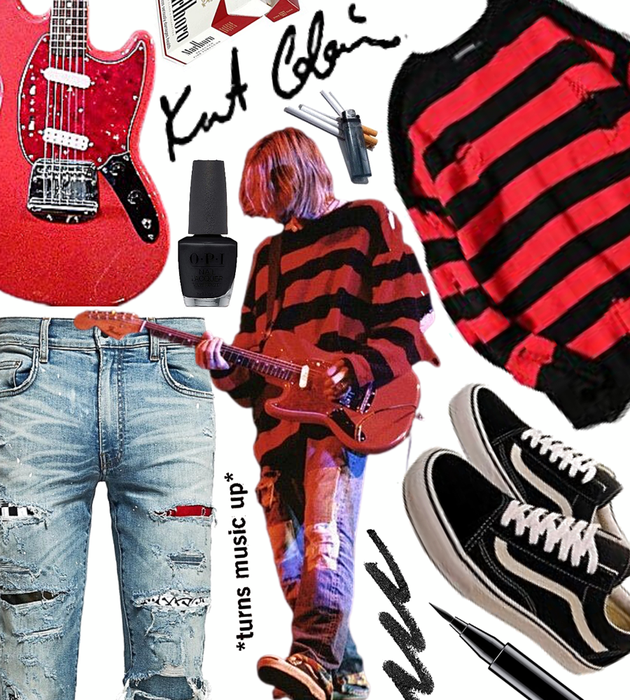
So I always kind of assumed the pejorative 'try-hard' was a biproduct of grunge. And the speed of the internet is important because Kurt Cobain killed himself in '94, and grunge and Nirvana fandom were just making their way to regional victoria by '96-'97. 

Then something happened. Like a generational change or something. Perhaps best captured in the first day of school scene in 21 Jump Street:

Somewhere, in like a decade or decade and a half, the script flipped. 

What became cool was trying hard. 

If grunge is a likely candidate for generating the 'try-hard' pejorative of the 90s, or maybe grunge was simply a symptom expressing the same reactionary sentiment; then maybe just maybe Malcolm Gladwell's 'Outliers' or Steve Job's 'your life is limited, don't waste it living someone else's life.' something in there made it really cool to try hard. Or you know perhaps Outlier's success was just a symptom of the same reactionary sentiment out there, and Steve Job's dress sense will never be explained.

Anyhoo.

What bothers me, is that effort, hard work, determination, persistence, investment. These are contextual virtues. For around the exact same time Nirvana were big, Michael Jordan was winning 6 NBA championships and he didn't mumble his way to 6 titles. We all loved Kurt, we all loved Michael Jordan. I like athletes, for example, trying really hard. Artists too. Except when an artist tries hard to please their lecturer at art school or something.

There goes my conundrum. Because I think so much of societal dysfunction, or even local community dysfunction, has taken a shape that is only possible in the absence of the pejorative of "try hard".

Let's get a better picture of what has changed. A lot of people alive today, that can legally drink while operating a vehicle have no idea about Nirvana, Michael Jordan or the Macarena. 

Youtuber Todd in the Shadows describes Nirvana as something like the hardest (left/right?) turn in music history. He has a classification in Trainwreckords called "Nirvana Killed My Career" two examples being Billy Idol's Cyberpunk and Motley Crue's Generation Swine

So I feel "grunge" is important an important concept. I think like all music, Nirvana's music was successful because its content spoke to the human condition. The presentation of grunge though was the big idea and the reason grunge was a phenomena that more slipped past the keeper in a moment of confusion than an inevitability. 

My highly subjective experience being that whatever I think of the 90s as being it began sometime after September 10th '91 with the release of Nirvana's Nevermind and ended July 8th '96 not even half a decade with the release of Spice Girls' Wannabe. The 90s music scene wasn't just grunge, it was also hip-hop, trip-hop, alt-rock, alt-metal, indy-rock, techno etc. It was Indy movies Tarentino being the biggest name, but also you may be surprised to know, there was a time that Kevin Smith was considered cool and interesting, there was Trainspotting etc. 

I only know of one book that has attempted to analyse what happened in the music industry, a book I haven't read but it echoes a phenomena which was basically the treasury doors opened and money was given to struggling artists and their shit got distributed and people exposed to it, found something they liked. My lasting impression of this period was a panic and scramble by the money men.

Crucially, what was briefly impossible, was that one could not optimize

Now, let's talk about what Grunge isn't. Something well covered I feel by Todd's analysis of "Generation Swine" (Where "Cyberpunk" was more betting on the wrong horse). 


I think nobody struggled with the 90s (Sep '91-June '96) more than Mayor Quimby with his struggles with wacking day. Whatever Grunge was intended to be, whatever it specifically was, what it couldn't be was buying pre-whacked snakes in order to gain esteem/status. Quimby's struggle with whacking day was probably the majority of people's struggle with the disorienting nature of the 90s.

A bizarre lesson in what Grunge isn't was when Simon Cowell lambasted a contestant on World Idol for entering with Nirvana's Lithium. Simon Cowell it seems, understands his antithesis.

Another excellent example of what grunge isn't I found on Pinterest, a wonderful resource in posts titled Grunge Aesthetic Outfits:

what?

nope.
still nope

Now I should cop to recognizing the difference between "grunge" and "grunge aesthetic" one is a thing and the other I should recognize as a simulacra, a different game, kind of like the difference between Japanese Lolita fashion (simulacra) and Victorian women's clothing (the thing itself). Keep that in mind that I'm not shitting on this blog post (the world needs less tweets and more blog posts) for which in my opinion maybe 5 of some 60 images come close to a 90s Grunge aesthetic. 

The key point being, whatever grunge was in my opinion it was antithetical to how to guides. A "grunge" makeup tutorial is not a grunge make up tutorial. A magazine spread detailing the items to assemble a "grunge" look cannot be a grunge look. What you couldn't do, and be accepted or acclaimed grunge for the brief period where grunge rode high - was try.

This was something you could do in the 80s (Mar '80-Sep '91, Sep '98-Present) you could buy shit to gain esteem. There may be no single item less grunge than Air Jordan's. Ironically contemporary to Nirvana. 

Grunge presented us with a Zen Koan of sorts: "How do you be cool?" "There is no how, you simply must be." Or as Yoda said "Do or do not, there is no try." in other words, people were condemned to meritocracy for an oh so brief period of time in an oh so small demographic.

But I think I cracked it. How to split the difference between laudable effort, the kind exhibited by athletes and trying hard.

Michael Jordan, for example, worked hard. But he isn't and wasn't throughout the 90s, a 'try-hard' even though he'd win a NBA championship, and then be in the gym the next day working out. 

Jordan wasn't a try hard, because basketball doesn't have any easy answers. Being like Mike, it turned out, and turns out, does not involve simply buying a pair of air jordans. It took an incredible amount of work, in the meantime rivals are making trades, Shaq is getting drafted, the game constantly changes. 

It's easy answers that make the try hard.

What do I mean by that?

It's actually quite hard to be 'cool' it likely most comes down to character and composure, temperament. Likely also divergent thinking, and shit that comes from within and you're probably talking about interplay between genes and environment.

So, in the mid 90s, there were easy answers to how to be cool. Bleach your hair into a kind of Labrador yellow, gel it into spikes if you're a guy (or a girl). Buy Oakley sunglasses. Get an eyebrow ring. Wear DC or Globe skate shoes. Basically go buy a Blink-182 costume from the stores and hey presto "cool".

But it also didn't work, almost like nature had gifted society a defence against sheep in wolves clothing. In that brief window of the 90s, we had some traction, some footing that briefly enabled us to say "I thought Spud was a fucking dipshit yesterday, now Spud owns a pair of Oakley sunglasses and I still think he is a fucking dipshit." 

And that was I suspect, liberating for a tiny number of people. People I like. And for most people, devastating.

Michael Jordan made most of his money I believe, from a lie - (please note, I'm obviously being hyperbolic) - that if you buy the shoes Jordan wears, if you drink Gatorade, you can "be like Mike." which you can't. Paying particular attention to the prime contenders to be the next Michael Jordan, like Kobe Bryant, Lebron James, Vince Carter and T-Mac wore their own shoes.

Shoes and diets are easy answers. Some problems have easy answers like "I'm hungry" has an easy answer. Other problems like "I can't stop drinking" don't have easy answers.

Once I drove someone to tears in front of me. Seems to me, this should happen more often, I am fairly mean. I probably take too much credit, but whatever. People who know me might think "oh god were you drunk and running your mouth?" No. I was trying to teach someone how to set intelligible goals. I use a format downloaded, literally from manager-tools.com referred to as MT goals, which is taking the old acronym SMART goals that people educated in the 90s would have heard ad-nauseum and removing all the useless shit from that acronym. Leaving you with "measurable" and "time specific" or "what" and "when". And we were literally going through the projects this person was working on and trying to get them to articulate MT goals. For example (not an actual example) if we were trying to control all shipping lanes in the pacific, an MT goal might be: Only encounter our warships in the Pacific Ocean by January 2023. We know what accomplishment of the task looks like, and when it should look like that.

Anyway, my trainee broke down and implored me "just tell me what you want." Catching me entirely off guard because the whole purpose of the exercise was to learn how to set these goals for yourself.

I don't think my trainee is a good example of the kind of people that were devastated by Grunge. But that incident is a good articulation of that devastation. 

In contrast to Michael Jordan, Kurt Cobain made most of his money, I believe, from a truth. That truth being there's nothing you can do, to be like Kurt. Kurt Cobain effectively cornered the market, on being Kurt Cobain. So you can grow out your hair, wear a striped sweater with jeans and try your hardest to be like Kurt, and the harder you tried, the less like Kurt you were. In a beautiful symmetry of the people most like Kurt being Chris Cornell, Eddy Vedder, Dave Grohl in the same way the people most like MJ are KB, AI, VC and when KB became most like MJ was when he stopped trying at all to be like MJ. Something amazingly Simon Cowell gets.

...

I'm banking on you having met a try-hard couple in your life. Two people who both don't just believe in easy answers, but believe in the same easy answers. 

Maybe they both belong to the same gym, and wear the same brands. Or maybe they both prey to the same idols. Or are both in the same open relationship. Maybe they both lost half their net wealth on crypto this year. 

But they found eachother and they are going to be okay. It is the rest of us that have to suffer them.

But these people make the world go round. In economic terms. Of course the power of that saying is in the observation that no human activity actually makes the world go round. 

Kurt Cobain had a huge market of fans. And you could sell those fans Nevermind, In Utero, MTV Unplugged in New York. But you couldn't sell them Kurt Cobain signature shoes. You couldn't sell them Gatorade. You would probably struggle to sell them heroin. 

But say you did release Kurt Cobain signature Converse One-Star shoes. Spud the fucking dipshit buys them. He buys them expecting to walk them into school the next day and hear a deafening cacophony of "cool shoes Spud." but instead hears a deafening silence punctuated only be the occasional "what a try-hard."

That's not a commercial environment any maker of consumer products wants to be in. Brands and products ride atop a social contract. I can't help it, I'm going to divert into my favorite marketing term "prole-drift"

Burberry, specifically in the UK became a victim of prole-drift between 2001-05. Namely "Chavs" the then "white-trash" of Britain developed a taste for knockoff Burberry gear. To the point of Burberry the real brand becoming synonymous with the UKs lowest status people.

Many luxury brands face this problem, you sell a luxury car, you could also sell a bunch of hats with the brand of your luxury car on it, to people who could never afford one of your cars. This could bring in big money, but damage your core business. Prole-drift is a risk.

Introducing us to the more common paradox of status - if someone low status obtains a high status symbol, the status of the symbol is reduced rather than the status of the person increasing.

Prole-drift however is a much better problem to have, than Try-hard being a hurtful pejorative. So your wealthy long term customers abandon you as you rake in cash from the unwashed masses. Prole-drift can be quite profitable. But selling shoes, glasses, cars, hairstyles, dances, watches, clothes, cars and having your customers experience derision...

This is like selling bread, but suddenly, over night the customers that eat your bread get hungry instead of full.

For certain, a lot of money was made in the 90s (Sep '91-June '96) and Grunge never got 100% market penetration. There was an eclectic mix of products that consumers ravenously consumed: Nine Inch Nails, Tool, Red Hot Chilli Peppers, No Doubt, Garbage, Smashing Pumpkins, Tori Amos, Bjork...watch enough Todd In The Shadows you'll realise everything was viable, you just could make the wrong move and hey presto - Nirvana killed your career, and that wrong move was trying. But U2, Metallica, Faith No More and Jane's Addiction coasted through and I'm sure a bunch of other 80s acts and even older. 

It was a period though where easy answers were something people had to live without for almost 5 years, until "Wannabe" delivered relief (and subsequent Nu Metal) letting people know once again that there would be a set of easy answers one only had to dedicate their efforts towards and we've never looked back even though those easy answers changed, they would ever afterwards always exist, and they could exist because kids stopped calling people "try-hards". 

People could be as desperate for esteem as they could stomach and nobody would give them flack for it, they would even encourage them. We all got a little bit more North Korean, we know our speech wasn't that great, but we'll take the standing ovation. Nobody dies of embarrassment that they spoke at a TEDx event. We went from the tragedy of Kurt Cobain, to the train wreck of Trisha Paytas.

Before concluding, I should probably spend less time on what I am weakest at - anthropology/sociology, and maybe just fucking define easy answers. That seems important.

Easy answers have no learning curve. In film, they require no montage. They are generally off-the-shelf. Easy answers are also, in the sense I'm using it, not an answer at all. 

For example, Oakley's may feature polarised lenses, but wearing them does not display something clever or witty for Spud to say, they don't apply a red filter notifying Spud to not yell out the inane thing he was going to yell out in class, and it doesn't send electric shocks through him preventing him from groping Michelle's tits after someone accused her of stuffing her bra.

Oakley glasses have never fundamentally changed a person, though I'm not entirely dismissing the concept of a makeover. Certainly for example dying your hair electric pink may disabuse your fellow highschool students of the belief that your conservative parents wouldn't let you do it. Wearing Ray Ban (or any knock-off) aviators might make you feel cool in a way that makes you act with greater confidence in a way that makes you cooler. But it's entirely possible that behaviour learned, when you lose those glasses or sit on them or whatever, you don't lose your newfound confidence. It was in you all along.

There is likely a contradiction perceivable though between applying effort to easy answers. Something even try-hards understand. Oakley sunglasses weren't cheap. It's just doing something that might make you interesting like reading Neil Gaiman's Sandman and being able to articulate why you like or dislike it in 1995 was to someone like Spud incomprehensibly difficult. But working shifts stacking shelves in a grocery store, or flipping burgers at McDonalds for weeks on end all to channel that mindless suffering into a mindless purchase is the essence of being a try-hard.

And this may seem harsh, and selling that harshness is the marketing coup that ended the 90s in June of '96. Because calling someone a try-hard wasn't to diminish the effort and suffering of stacking super market shelves or smiling at bogans ordering Quarter pounders without pickles while other kids were playing Warcraft II but to express anguish that someone who suffered through that would spend it on something as trivial and vapid as Oakley's. And the even sadder phenomena of parents who had taken risks and worked hard to build up a profitable business so that their kid Spud never had to stack shelves, flip burgers or be polite to strangers in order to have a pair of Oakley sunglasses.

Perhaps the epitome of a try-hard, in my opinion, is also straight out of the 90s and has never escaped the cruelty and rejection of trying hard. 

I'm talking of course about Hillary Clinton. If you can't take the example of Hillary Clinton the most qualified person in history to ever lose to the other least popular candidate in history of US presidential elections, and understand what a try-hard is, I can't explain it to you...no matter how hard I try... there's just no easy answer: